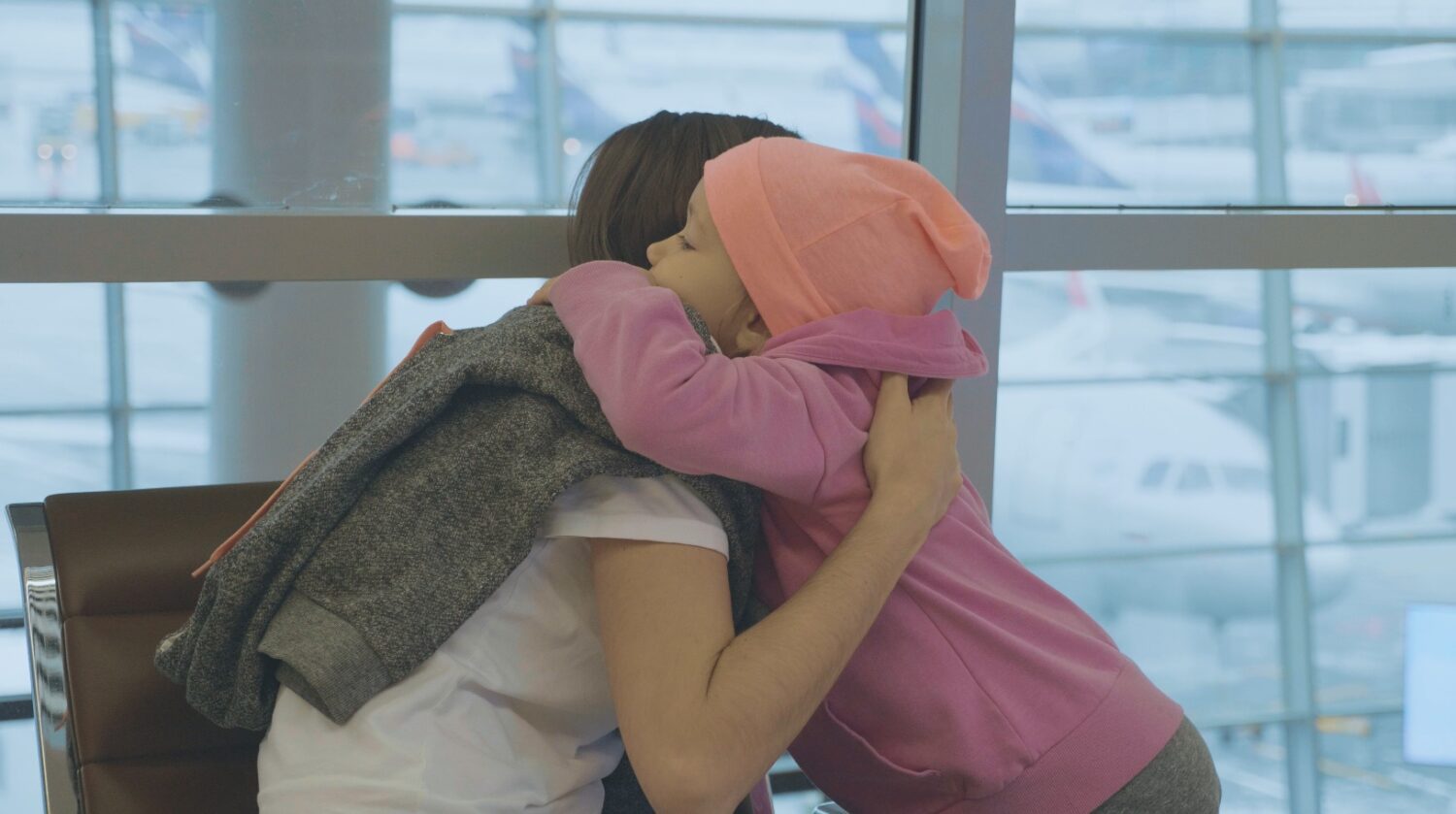
On 4 September 2025, Appendix Family Reunion (Sponsors with Protection) was closed to new applicants, which means that refugees can no longer sponsor a child or a dependent partner under the family reunion rules.
However, there are other options available for bringing over family members, which we will discuss here.
What is refugee family reunion?
Until the suspension of this route in September 2025, those in the UK with a “protection” status, meaning either refugee leave or Humanitarian Protection (HP), could bring over their partner or spouse, provided the relationship existed before they fled their home country, and any dependent children under 18. The person with protection status did not have to wait until they have settlement, also known as indefinite leave to remain (ILR), and could bring over their partner or child as soon as they are granted refugee leave or HP.
The rules were generally easier to meet than other family rules, as there were no financial, accommodation or English language requirements to meet.
Why was the route suspended?
The government believes that the route was too lax and resulted in too many people qualifying in circumstances where they are not sufficiently settled or self-sufficient:
“However, in the UK those family applications now come in, on average, around a month after protection has been granted, often even before a newly granted refugee has left asylum accommodation. As a consequence, refugee families who arrive are far more likely to seek homelessness assistance. Some councils are finding that more than a quarter of their family homelessness applications are linked to refugee family reunion.”
The suspension of the route was announced only a week before the changes took effect. Anyone who lodged an application before 3pm on 4 September 2025 will still have their applications decided under the old rules, though the short notice will mean many people who were otherwise eligible will have missed the deadline.
What will happen to the family reunion route?
The government intends to replace the now-closed route with a new system in spring 2026, which is expected to be stricter and more difficult to meet:
“So in our asylum policy statement later this year, we will set out a new system for family migration, including looking at contribution requirements, longer periods before newly granted refugees can apply, and dedicated controlled arrangements for unaccompanied children and those fleeing persecution who have family in the UK.”
How can refugees bring over their partner or spouse in the meantime?
People with refugee leave and HP have always been able sponsor their spouse, civil partner or unmarried partner under the standard partner route found in Appendix FM, though previously, it only made sense to choose this route when sponsoring a new, post-flight partner.
Until the new rules are enacted, this will be the only way for refugees to sponsor their partner.
What are the requirements of the partner/spouse route?
This route contains a number of requirements, including:
- Financial requirement: the sponsor will usually be required to earn £29,000, though there are other ways to meet this requirement, and there are rigid rules about how this has to be evidenced. A different test applies for those who are in receipt of certain kinds of benefits.
- English language requirement: the applicant will usually need to pass a designated English language test at level A1 at the entry clearance stage, though there are other ways of meeting this requirement.
- Accommodation: the sponsor must have adequate accommodation that will not be overcrowded if the applicant joins them; they can own it, rent it or even stay with a friend or family member.
- TB test: depending on where the applicant lives and has recently lived, they may need a TB test from a designated clinic.
- Relationship requirement: they must be a spouse, civil partner or unmarried partner of the person with protection status. If they are applying as an unmarried partner, they must have been in a relationship akin to marriage for at least two years. It is also possible to apply as a fiancé/fiancée. The relationship must be genuine and subsisting.
- Suitability requirements: there are a number of grounds of refusal that apply to this category, including those based on criminality, owing an NHS debt and other poor conduct.
This is not an exhaustive list. If you are considering making this application, we would advise seeking legal advice that is tailored to your circumstances.
How can refugees bring over their dependent children?
Appendix FM was amended to allow those with protection status to bring over their dependent children, so this is currently the only way someone with refugee leave or HP can sponsor their child before they have ILR.
An application can be made for a child to accompany a parent applying in the spouse/partner route or they can apply in their own right to join their parent in the UK.
What requirements do children have to meet?
- The child must be under 18 at the date of application. They must not be married or in a civil partnership or be leading an independent life.
- Their sponsor must meet the same financial and accommodation requirements referenced above, as this applies to both partners and children.
- Unless they will end up with both of their parents in the UK if the application is granted, their UK-based parent must either have sole responsibility over their upbringing or there must be serious and compelling family or other considerations that make leaving the child overseas undesirable (which tends to be a high threshold in practice).
- They may need to provide a TB test certificate, depending on where they are and where they have recently lived.
Again, this list is not exhaustive and we would recommend getting tailored legal advice if you are considering applying under this route.
What about other relatives?
A refugee can also apply to sponsor a child if they are not the parent but rather a close relative of a child they wish to bring over, which is defined as:
- Grandparent
- Brother or sister
- Step-parent
- Uncle or aunt
The rules are found in Appendix Child Relative (Sponsors with Protection) and include an adequate maintenance requirement, which is a slightly more complex financial requirement that is sometimes easier to meet, as well as the requirement to have adequate accommodation.
A refugee can similarly sponsor an adult relative under Appendix Adult Dependent Relative, which is a complex route that allows people to sponsor their adult sibling, parent or grandparent, provided that:
- The applicant requires assistance with everyday tasks, such as washing themselves, cleaning and cooking, as a result of old age, illness or disability, and
- The care that they require is not available in their home country, even with the sponsor’s resources.
In practice, this is a very difficult test to meet and it is the main reason why the Home Office refuses the vast majority of these applications. There are also other requirements, including an adequate maintenance and accommodation requirement.
Because of the complexity of these applications and the high refusal rates, we would strongly recommend anyone considering applying on this basis to seek expert legal advice.
Can a child refugee sponsor a family member?
No, not at present.
Children with refugee leave or HP were not previously able to sponsor a family member, such as a parent, to join them under the Family Reunion rules, and this remains the case.
However, this has recently been the subject of a legal challenge, which partially succeeded on the basis that the policy barring refugee children from sponsoring a family member arguably meant that the government was in breach of its duty to act in the best interests of the child (which is known as a “section 55 duty”), with the result that it must now carry out a review of the policy.
In the meantime, there are no provisions in the Rules that permit refugee children to sponsor a family member.
What if I don’t qualify for any of these routes?
Unfortunately, many people who would have previously qualified as a partner/spouse or child under the previous Family Reunion rules will fail to meet one or more of the more stringent rules under Appendix FM, most commonly the financial requirement or the English language requirement.
In these cases, it may be possible to make an application that relies on exceptional circumstances under Appendix FM to waive one or more of these requirements, or even completely outside the Immigration Rules. Applications outside the Rules are particularly complex and have high rates of refusal but they are sometimes the only option when an applicant fails to meet one of the mandatory requirements, such as the nature of their relationship to the sponsor.
Our friendly team has extensive experience and an excellent track record of making successful applications based on family life, including Adult Dependent Relative applications.
Contact us today for advice or assistance with any of these applications.
Vanessa Ganguin Immigration Law is highly rated in all main legal guides for responsive immigration advice to individuals and businesses. For more detailed advice on this and other immigration routes, or for a strategic consultation on what would work best for you, please contact us on 0207 033 9527 or enquiries@vanessaganguin.com.