Earned settlement: Home Secretary’s ILR changes announced on 2 November 2026
 |
alexp@vanessaganguin.com +44 20 4551 4906 +44 (0) 7377 375312 |
|
alexp@vanessaganguin.com +44 20 4551 4906 +44 (0) 7377 375312 |
2 November 2026
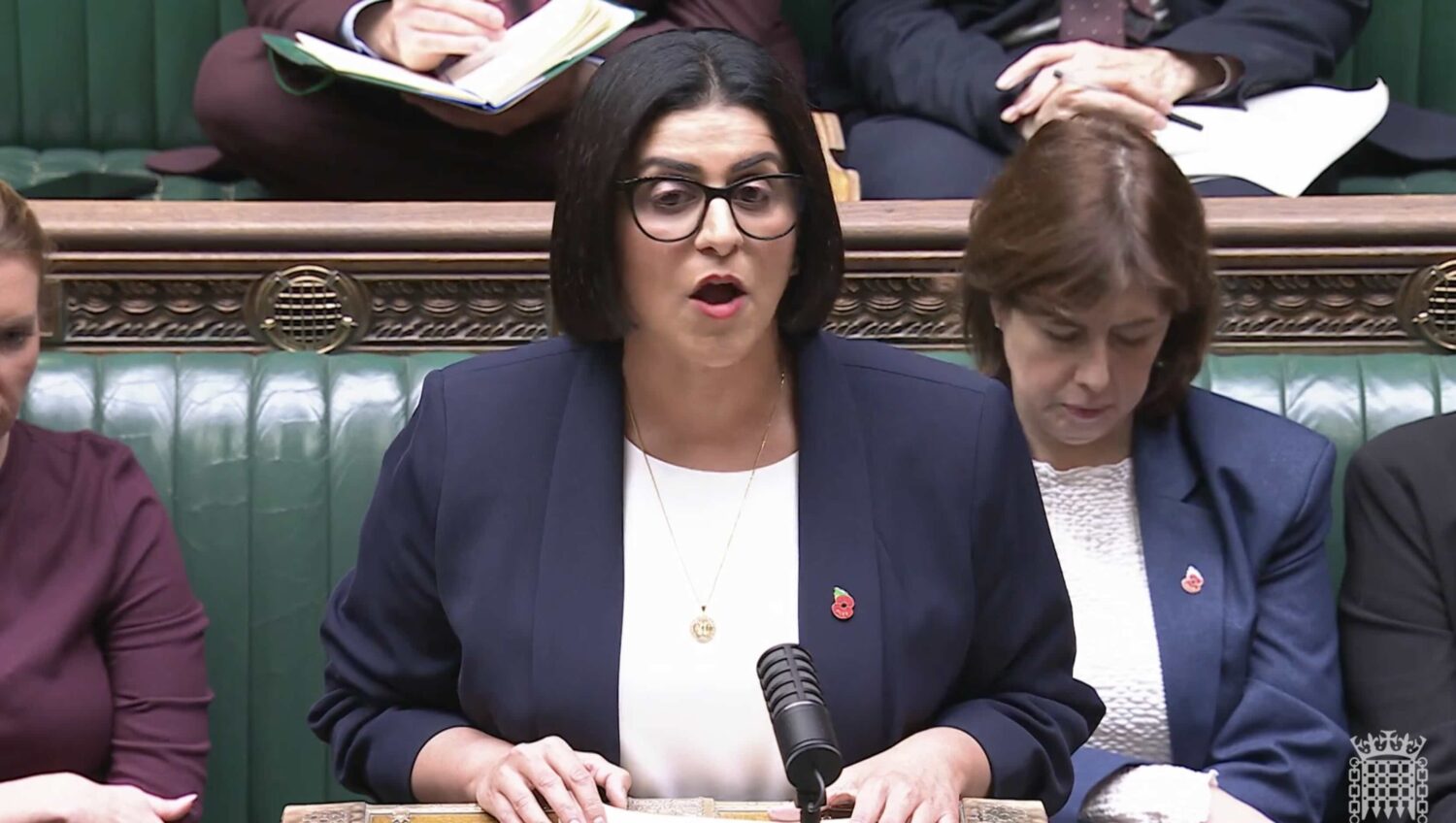
The Home Secretary Shabana Mahmood has confirmed the shape of the government’s “earned settlement” reforms in a statement to the House of Commons this afternoon following the closure of the public consultation on the issue in February 2026.
What are the ILR changes that the Home Secretary confirmed?
The reforms were first trailed in the Immigration White Paper of May 2025 and set out in detail in the “Fairer Pathway to Settlement” statement of 20 November 2025. That statement opened a consultation which drew more than 200,000 responses (the vast majority opposing proposals). The Home Secretary’s announcement of the measures that will be carried out accompanies the government’s response to that consultation in document form. They detail a massive overhaul of routes to settlement.
The principle of the Home Secretary’s “earned settlement” consultation has not changed much following the consultation, but as expected there have been some tweaks. More details are to fleshed out, largely in a Statement of Changes expected in December. But below are the main changes she announced to parliament, alongside the published Government Response to the Consultation (CP 1707).
The government says it expects between 1.3 million and 2.2 million people to settle between 2026 and 2030, with a central estimate of 1.9 million. It says more than 500,000 of them will now become eligible later than they would have under the current rules.
Key points
The main factors that will disqualify adults from qualifying from settlement (also known as indefinite leave to remain or ILR) will be:
· Criminal record (including convictions abroad, suspended sentences and conditional cautions – apparently anything short of a spotless criminal record)
· English attainment (for most people this will be level B2, for those on the Refugee Resettlement Scheme it will be A2)
· Unpaid government debt (e.g. NHS debt, tax or litigation debt)
· Failure to make three years of National Insurance contributions (or in some cases, five)
Some people will retain their five-year path to settlement, including:
· Those earning at least £50,271
· Public sector workers like doctors, nurses or teachers
Some will have a three-year path to settlement:
· Anyone earning at least £125,141
· Anyone on “highest talent” schemes (to be confirmed by the Migration Advisory Committee but likely to include Global Talent and Innovator Founder)
Some will remain exactly where they are now:
· Those on the BN(O) route
· Overseas members of Armed Forces
· Those “with a British connection” (partners, parents and children of British citizens, UK Ancestry)
· Legacy routes such as Afghan schemes and Windrush
· unaccompanied asylum-seeking children and children in care
· young people who have grown up in the UK and lost their status
· victims of domestic abuse
· bereaved partners
Everyone else will be placed on a 10-year route to settlement (with some exceptions).
Those who have breached immigration rules or claimed asylum without coming through one of the few designated safe and legal routes face a 20-year route, with an extra 10 years if they came by “illegal” means such as a small boat. Refugees can switch to a Protection Work and Study fresh 10-year clock with qualifying work and study periods.
Transitional provisions will apply to carers and certain national pay scale public sector education and healthcare workers who started their routes to settlement before 12 May 2025.
The standard route to ILR becomes 10 years
Those earning under £50,271 – the financial threshold where the 40% higher-rate Income Tax bracket starts – will now need 10 years in the UK before they can apply for settlement, up from five. Over that period they must keep renewing their visas and show sustained contribution to the country — through work, tax and compliance with the conditions of their leave.
The five-year route, and a shorter three year route will be available for the groups set out below.
The faster routes to “earned settlement” explained
Higher earners.
The thresholds are the income tax bands: £50,271 for the five-year route and £125,141 for the three-year route. Both are measured over a window rather than every year.
High talent.
People on the Global Talent, Innovator Founder, Scale-up, International Sportsperson and Skilled Worker routes can use the three-year pathway if they meet the £125,141 threshold. Those on Global Talent and Innovator Founder may indeed qualify through the high talent group itself, subject to a review the government has asked the Migration Advisory Committee to carry out. For Global Talent and Innovator Founder, the most recent grant of permission must have been in that route.
Public service.
Workers in specified health and education occupations qualify after five years regardless of salary, provided they have spent five years in an eligible role. The list (Annex C of the government response) is drawn from the occupations in the Immigration Rules whose going rates are set by national pay scales:
• Doctors: generalist and specialist medical practitioners; dental practitioners
• Nurses: midwives, community, specialist, mental health and children’s nurses, nurse practitioners and other registered nursing professionals
• Allied health: physiotherapists, occupational therapists, speech and language therapists, psychotherapists and CBT therapists, clinical and other psychologists, therapy professionals not elsewhere classified, pharmacists, optometrists, medical radiographers, paramedics, podiatrists and other health professionals not elsewhere classified
• Teaching professionals: nursery, primary, secondary, further education and special and additional needs teaching professionals, head teachers and principals
• Social workers
Note the list is professional-level roles. Nursing auxiliaries, teaching assistants and care workers are not on it; they are dealt with through the transitional arrangements below, and those arriving after May 2025 will face a 10-year route (unless they switch to an accelerated pathways through promotion, for instance).
Other five year routes to settlement
British connection. Partners, parents and children of British citizens who have met the core requirements (have not needed to rely on exceptional circumstances), and Commonwealth citizens on the UK Ancestry route, keep a five-year pathway. This covers the largest single group untouched by the reforms: the Home Office expects around 223,000 people sponsored by a British citizen on a family route to settle between 2026 and 2030 on the same five-year timetable as now.
The minimum requirements everyone must meet for settlement
Before the clock matters at all, every adult applicant must clear five mandatory requirements. None of them can be offset by higher earnings or public service.
1. No criminal record. This is the single biggest tightening in the document. Today, refusal is mandatory only for sentences of 12 months or more. Under earned settlement, any adult with a criminal record in the UK will be refused. That includes suspended sentences, conditional and absolute discharges, conditional cautions, court fines, community sentences and civil orders following a conviction. Overseas convictions count where the conduct would be an offence in the UK. Discretion remains for offences committed under 18.
2. No outstanding government debt. NHS debt, unpaid tax and National Insurance, and litigation debt owed to the Home Office must all be cleared before applying. Refugees who were required to repay asylum support must have repaid it or be keeping to an agreed plan.
3. English at B2. The standard rises from B1 (GCSE equivalent) to B2 (A-level equivalent). Higher English (C1) earns no reduction in the qualifying period. The usual exemptions for children, people aged 65 and over, and those with a physical or mental condition continue.
4. Life in the UK test. Retained, with the same exemptions. The government says it is reviewing the test.
5. Sustained economic contribution. A minimum of £12,571 a year — the income tax personal allowance and National Insurance threshold — for at least three years. Children, people aged 65 and over, and those unable to work because of a physical or mental condition are exempt. Couples and families can combine their earnings (see below).
How will household income count to settlement?
Couples can combine their earnings to meet the minimum contribution. The combined threshold is £25,142, twice the individual figure. A partner who works part-time or not at all because of caring responsibilities does not need to meet £12,571 on their own, provided the couple reaches £25,142 together. Only one partner may rely on the other’s income.
Will there be any transitional provisions?
Carers who were already in the UK before the Immigration White Paper was published on 12 May 2025 will be subject to a slightly different policy but will be separated into two groups. The first, who “have fulfilled the conditions of their visa”, which we assume refers to meeting the salary and sponsorship requirements, will be able to settle after five years.
The second, who “have not fulfilled the conditions of their visa” will instead be able to extend their permission for another five years, restricted to genuine work in the sector, and will be able to apply for settlement at the end of this five-year period. Care workers whose sponsor loses its licence get 120 days to find a job offer plus 60 to regularise, from 1 February 2027.
Public sector workers in education and healthcare roles that are on a national pay scale for the purposes of UK Immigration Rules, yet are in occupations with a skill level classification below RQF6 and so not on the list of professionals qualifying for the 5-year pathway, will also benefit from transitional provisions. These include teaching assistants and auxiliary nurses. As with carers, this one-off concession will only apply to those who joined before the White Paper was published in May 2025.
Will those in “low skilled” occupations have a 15 year qualifying period?
No, this appears to have been dropped.
Who will have an even longer qualifying period than 10 years?
The Home Secretary has suggested that someone who has breached immigration law will have a 20-year qualifying period instead. Further, anyone claiming benefits will only be able to settle once they have spent five years without claiming benefits.
What about refugees?
Refugees coming to the UK on “safe and legal” routes will be in a five-year route to settlement.
The standard qualifying period for refugees who arrive by anything other than a safe or legal route will be 20 years. A further 10 years will be added to this where someone enters the country “illegally”, e.g. by way of “a small boat”.
However, those who are in work or study may be able to reduce their qualifying period by 10 years.
How will dependants qualify for ILR?
The situation for children is not set to change much while spouses are expected to settle at the same time as the main applicant if they arrived at the same time. A partner who joins later will need to complete the same qualifying residence period before settling. Children who have spent seven years or the majority of their life in the UK will remain on their existing settlement arrangements.
It is suggested that a household income (families applying together need a household income of £25,142 – double the minimum for an individual) will be used as part of the calculation to determine whether the requirements are met instead of an individual one. There is still a lack of clarity on these points but more can be found in this response to the consultation, published today.
Which routes count towards settlement and the end of Long Residence
Time in the UK will only count towards settlement if it is spent on a route intended to lead there. Time on a temporary route will not count, however long it lasts. That is the principle behind the second major structural change in the document: the Long Residence route will close.
Under the current rules, anyone with 10 years’ continuous lawful residence can apply for settlement under the Long Residence route, whatever visas they held along the way. Time as a Student, on the Graduate route or on other temporary permissions all counts. For many people who came to study and stayed to work, Long Residence has been the realistic path to ILR. Under earned settlement it goes. Student and Graduate time will no longer build towards settlement simply because a person later reaches 10 years in the UK.
| Routes that count towards settlement | Routes that do not count |
| Skilled Worker (including Health and Care) | Student |
| Global Talent | Graduate |
| Innovator Founder | High Potential Individual |
| Scale-up | Visitor |
| International Sportsperson | Youth Mobility Scheme |
| Tier 2 Minister of Religion | Global Business Mobility (all sub-routes) |
| UK Ancestry | Temporary Worker routes (Creative, Charity, Religious, Government Authorised Exchange, International Agreement) |
| Family – Partner and Parent | Seasonal Worker |
| Stateless Person | Overseas Domestic Worker |
| Family and Private Life (10- or 20-year pathways only) | Ukraine Scheme routes (Homes for Ukraine, Family, Extension, Permission Extension) |
| Core Protection, and Protection Work and Study | Leave Outside the Rules (treatment still to be decided) |
| Safe and Legal routes |
Three points of detail:
- Not every qualifying route reaches every pathway. Family and Private Life permission (Appendix FM where exceptional circumstances were relied on, and private life) cannot be used for the three- or five-year routes. Those applicants are on the 10-year pathway, or twenty if they have accessed public funds.
- Time on different kinds of route cannot be combined. Time on a protection or human-rights route cannot be added to time on a work or family route. Someone who comes on a work visa and later claims asylum starts the clock again when they move onto the protection route, and vice versa.
- Leave Outside the Rules is unresolved. The government acknowledges that some LOTR grants may have been intended to lead to settlement and says it will set out its approach in due course.
For anyone currently on a Student or Graduate visa who is planning to stay, the practical consequence is that the clock to settlement does not start until they switch into a qualifying route such as Skilled Worker.
Longer waits: public funds, immigration breaches and illegal entry
Public funds
To use the three-, five- or 10-year pathway, an applicant must not have accessed specified public funds in the five years immediately before applying. Someone who has must either complete a fresh five-year period on a qualifying route without public funds, or wait until they have completed 20 years. The government will start from the existing Immigration Rules definition of public funds and has said it will decide which benefits count, and what safeguards apply for vulnerable groups, before implementation.
Immigration breaches.
A specified immigration breach committed as an adult puts the applicant on the 20-year pathway, whatever their earnings. The breaches will be listed later in the Immigration Rules and will include overstaying, breaching a condition of leave, using deception in an application and frustrating immigration control. Breaches committed under 18 do not count.
Refugees
The architecture proposed in November 2025 stays, with the periods now fixed:
| Route | Who | Qualifying period | Key conditions |
| Safe and Legal routes | Refugees admitted through the UK Resettlement Scheme and other designated resettlement or sponsorship routes | 5 years | Route requirements. UKRS refugees need A2 English, not B2, and are exempt from the five-year public funds condition |
| Protection Work and Study | Refugees granted protection in the UK who move into sustained work, education or training | 10 years on this route | £12,571 in three qualifying years if working; B2 English; Life in the UK test; asylum-support repayments kept up |
| Core Protection | Refugees granted protection in the UK who do not move into work or study | 20 years | B2 English; Life in the UK test; asylum-support repayments kept up |
| Protection Work and Study after illegal entry | As above, having entered illegally | 20 years (10 + 10) | A further 10 years for illegal entry, unless Article 31 of the Refugee Convention applies |
| Core Protection after illegal entry | As above, having entered illegally | 30 years (20 + 10) | As above |
The 10-year Protection Work and Study clock starts when a person moves onto that route; time already spent on Core Protection does not count. A refugee who spends one year on Core Protection before finding sustained work could therefore settle 11 years after being granted protection. Entering the UK legally on another visa and then claiming asylum does not put someone on the five-year safe and legal pathway.
Illegal entry applies to everyone, not only refugees. Anyone who entered the UK illegally as an adult faces an additional 10 years before settlement, whatever route they later seek to settle on. The exception is where Article 31 of the Refugee Convention protects the person from penalties for illegal entry — broadly, refugees who came directly and presented themselves promptly. How that safeguard will work is to be set out before implementation.
Refugees who claimed asylum before 2 March 2026 and are not on safe and legal routes will move to Core Protection, but time already spent with refugee status will count towards settlement.
When will the changes to ILR start?
The statement of changes to the Immigration Rules outlining these changes in detail is due to be published in December 2026, with the changes effected across 2027.
Next steps for those seeking to settle in the UK
Nothing changes today. The consultation response sets policy; the rules themselves will follow in a statement of changes to the Immigration Rules, and the current routes stay in force until that takes effect. The government has not given commencement dates for most of these changes. It has said it will publish further guidance and a full impact assessment before implementation, with the detailed arrangements for vulnerable groups set out in guidance next year. The care worker sponsor-licence grace period is dated 1 February 2027.
In the meantime:
• If you are close to qualifying under the current rules, timing now matters. Check your eligibility date, and whether you arrived before or after May 2025.
• If you are on a Student or Graduate visa and intend to stay, the Long Residence route will not be there as a fallback. Your settlement clock starts when you switch into a qualifying route.
• If you are on the Skilled Worker route, your salary now determines how long you wait, not just whether you qualify. Where a pay review is due, £50,271 and £125,141 are the figures to have in mind — and they move with the tax bands.
• If you have any criminal record, however minor, take advice before applying. The new test is absolute for adults.
• If you employ sponsored workers in social care, expect the 1 February 2027 grace-period rules and the further Health and Care visa to change how you plan around sponsor compliance and retention.
• If you are a refugee or have a pending protection claim, the route by which you arrived and whether you move into work now have a direct bearing on how long settlement will take.
If you would like to discuss how the new rules affect you or your business, feel free to contact us.